Key Takeaway
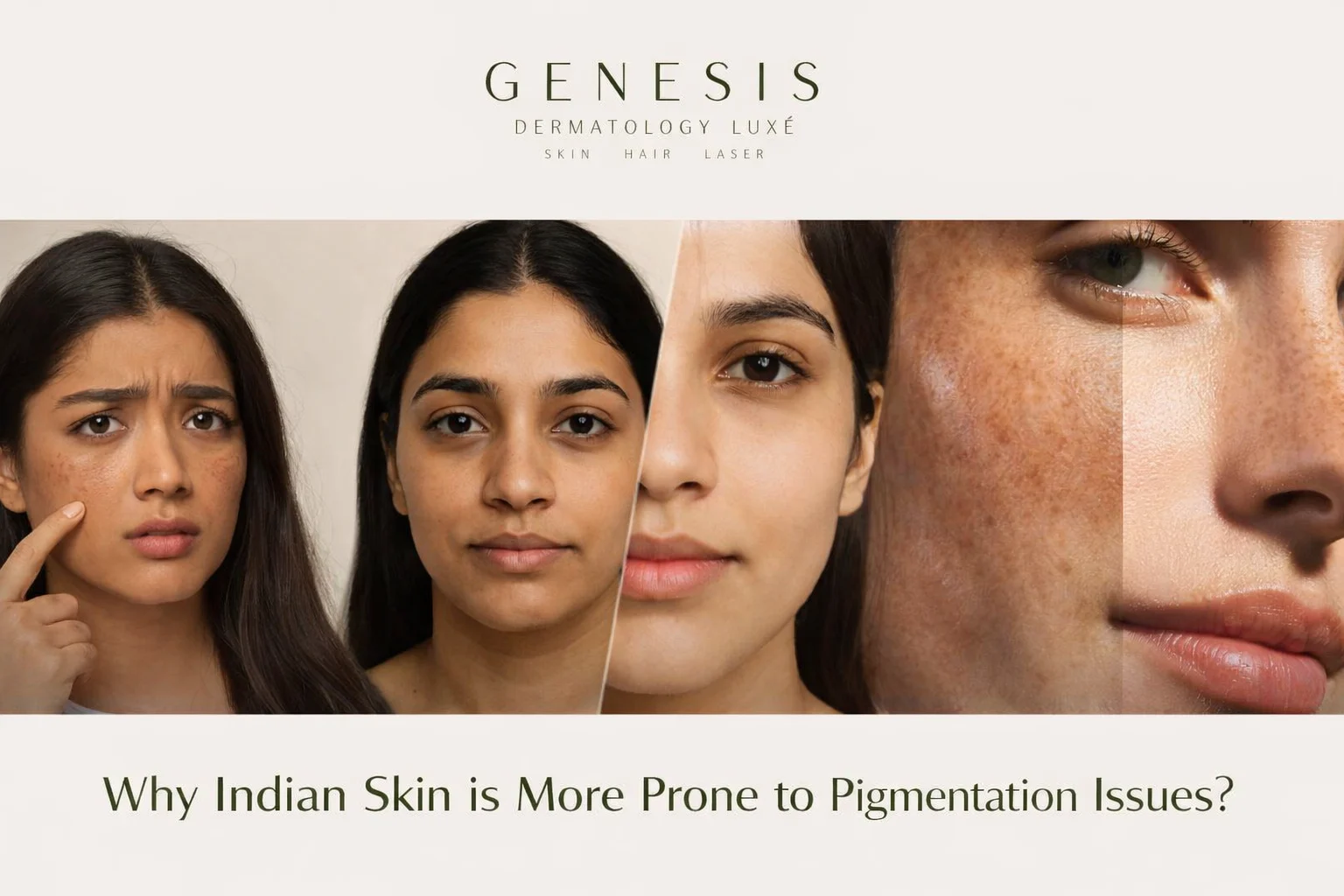
Indian skin contains higher and more reactive melanin levels compared to lighter skin tones, making it significantly more susceptible to uneven pigmentation, dark spots, and post-inflammatory hyper pigmentation. Understanding the biological, environmental, and lifestyle factors behind this tendency is the first step toward prevention and effective treatment. Visiting the best skin clinic with a qualified dermatologist ensures safe, targeted care tailored to your skin type.
Table of Contents
- Introduction
- What Is Skin Pigmentation?
- The Science Behind Indian Skin and Melanin
- Top Reasons Indian Skin Is More Prone to Pigmentation
- Common Pigmentation Conditions in Indian Skin
- How Sun Exposure Worsens Pigmentation in Indian Skin
- Hormonal Triggers Specific to Indian Skin
- The Role of Inflammation and Skin Injury
- Dietary and Lifestyle Factors
- How the Best Skin Clinic Diagnoses Pigmentation
- Treatment Options at the Best Skin Clinic
- Why Us? Genesis Dermatology Luxe, R S Puram Coimbatore
- FAQs
- Conclusion
Introduction
Pigmentation problems are among the most common skin concerns among people of South Asian descent. From stubborn dark patches on the cheeks to uneven skin tone across the neck and arms, millions of Indians deal with some form of hyper pigmentation throughout their lives. Yet very few understand why this happens more frequently in Indian skin compared to other skin types.
The answer lies deep within the skin itself, in its unique biological makeup, its response to the tropical sun, and how it reacts to hormonal changes and inflammation. Whether you are dealing with melasma, post-acne marks, or sun-induced tanning that simply refuses to fade, the root causes are more layered than most people realize.
This blog breaks down the science in simple, clear terms and explains what you can do about it. If you have been looking for the best skin clinic to address your pigmentation concerns, this guide will also help you understand what to expect from expert dermatological care.
To know more about Pigmentation Genuine and Affordable Pigmentation Treatment for Indian Skin: Happy Patients
What Is Skin Pigmentation?
Skin pigmentation refers to the coloring of the skin, which is primarily determined by a pigment called melanin. Melanin is produced by specialized cells called melanocytes, which are present in the outer layer of the skin known as the epidermis.
When melanin production becomes irregular or excessive in certain areas, it leads to what dermatologists call hyper pigmentation. This manifests as dark spots, uneven patches, discoloration, or a generally uneven skin tone. In Indian skin, this process is faster, stronger, and harder to reverse than in lighter skin tones, which is why professional guidance from the best skin clinic is often necessary for effective treatment.
The Science Behind Indian Skin and Melanin
To understand why Indian skin is more prone to pigmentation, we need to look at what makes it different at the cellular level. Indian skin generally falls between Type III and Type V on the Fitzpatrick scale, which classifies skin based on its response to UV radiation.
Here is what is unique about melanin in Indian skin
- Indian skin has a higher density of active melanocytes compared to lighter skin types.
- The melanocytes in Indian skin produce a type of melanin called eumelanin, which is darker in color and more reactive to triggers.
- Even though Indian skin has a natural defense against UV rays due to higher melanin, this same trait causes it to overproduce melanin in response to even minor stimuli.
- Melanin transfer from melanocytes to surrounding skin cells is faster and more pronounced in Indian skin.
- This over activity means any form of skin injury, whether from acne, sun exposure, or hormonal changes, triggers a disproportionate pigmentation response.
This is why the best skin clinic for Indian patients must be equipped with dermatologists who understand Fitzpatrick Type III to V skin and have experience with melanin-rich skin types.
Top Reasons Indian Skin Is More Prone to Pigmentation
Multiple overlapping factors explain the high incidence of pigmentation in Indian skin. These include:
1. Overactive Melanocytes
As explained above, the melanocytes in Indian skin are highly sensitive and quick to react. Any trigger, from UV rays to friction to a minor cut, can set off excessive melanin production that leads to a lasting dark mark. This is why Indian skin tends to develop post-inflammatory hyper pigmentation (PIH) much more easily than lighter skin types.
2. Year-Round Sun Exposure
India’s geographic location means that people receive intense UV radiation throughout the year. Prolonged, cumulative UV exposure is the single most significant external trigger for melanin overproduction in Indian skin. Unlike colder climates where sun exposure is seasonal, Indian skin is under constant UV stress, which requires consistent sun protection and, when damage has occurred, treatment at the best skin clinic.
3. Hormonal Sensitivity
Indian women are particularly susceptible to melasma, a form of pigmentation triggered by hormonal changes such as pregnancy, oral contraceptive use, or thyroid imbalances. Estrogen and progesterone stimulate melanocyte activity, and in Indian skin, this stimulation leads to pronounced and persistent dark patches, most commonly on the face.
4. Genetic Predisposition
Genetics plays a strong role in how Indian skin responds to pigmentation triggers. Families with a history of melasma, freckles, or persistent dark spots are more likely to pass on this melanin sensitivity to the next generation. This genetic component is something the best skin clinic accounts for when formulating individualized treatment plans.
5. Post-Inflammatory Response
Acne is extremely common among Indians, and every breakout leaves behind a dark mark called post-acne hyper pigmentation. In lighter skin types, these marks fade within weeks. In Indian skin, they can persist for months or even years without targeted treatment. This characteristic makes the role of the best skin clinic even more critical for Indian patients dealing with acne-related pigmentation.
Common Pigmentation Conditions in Indian Skin
Indian skin is disproportionately affected by the following pigmentation disorders
- Melasma: Brown or grey-brown patches on the face, often triggered by hormones and sun exposure.
- Post-Inflammatory Hyper pigmentation (PIH): Dark spots left behind after acne, rashes, insect bites, or skin injuries.
- Periorbital Hyper pigmentation: Commonly known as dark circles, these are very prevalent in Indian skin due to both genetic and lifestyle factors.
- Freckles and Solar Lentigines: Sun-induced spots that accumulate over time with chronic UV exposure.
- Lichen Planus Pigmentosus: A condition unique to darker skin tones, causing grey-brown patches especially on sun-exposed areas.
- Drug-Induced Pigmentation: Certain medications, including anti malarial and some antibiotics, can cause skin darkening, particularly in Indian skin.
Correct diagnosis is the foundation of effective treatment. This is why choosing the best skin clinic with experienced dermatologists who specialize in Indian skin types is not optional, it is essential.
How Sun Exposure Worsens Pigmentation in Indian Skin?
Ultraviolet radiation remains the most powerful environmental trigger for pigmentation in Indian skin. Both UVA and UVB rays penetrate the skin and stimulate melanocytes to produce more melanin. While this is a natural protective response, in Indian skin it very often crosses into overproduction.
The problem is compounded by the fact that many Indians do not apply sunscreen consistently or do not use broad-spectrum SPF 30 and above formulations. Additionally, cultural and occupational factors such as outdoor work, farming, and commuting on two-wheeler without sun protection lead to chronic, cumulative UV damage.
Key sun protection habits recommended by the best skin clinic include
- Applying a broad-spectrum SPF 50 sunscreen every morning, including on cloudy days.
- Reapplying sunscreen every two to three hours during outdoor activity.
- Wearing protective clothing, wide-brimmed hats, and UV-blocking sunglasses.
- Avoiding direct sun exposure between 10 AM and 3 PM, when UV intensity peaks.
Without diligent sun protection, even the most advanced treatments offered by the best skin clinic will produce limited or short-lived results.
Hormonal Triggers Specific to Indian Skin
Hormonal pigmentation, primarily melasma, is one of the most challenging forms of skin discoloration to treat. Indian women are especially vulnerable due to a combination of higher hormone sensitivity and prolonged sun exposure.
The primary hormonal triggers for pigmentation in Indian skin include
- Pregnancy: The surge in estrogen and progesterone during pregnancy stimulates melanocytes, often causing the mask of pregnancy (chloasma), which appears as dark patches on the forehead, cheeks, and upper lip.
- Oral Contraceptives: Birth control pills containing estrogen can mimic pregnancy hormones and trigger melasma in genetically susceptible individuals.
- Thyroid Dysfunction: Both hypothyroidism and hyperthyroidism have been linked to pigmentation changes in Indian skin.
- Poly cystic Ovary Syndrome (PCOS): This extremely common hormonal disorder among Indian women can contribute to uneven pigmentation, particularly around the neck and underarms.
Treating hormonal pigmentation requires addressing both the visible skin concern and the underlying hormonal imbalance. The best skin clinic will work in conjunction with endocrinologists or gynecologists where necessary for comprehensive management.
The Role of Inflammation and Skin Injury
One of the most overlooked aspects of pigmentation in Indian skin is how inflammation triggers melanin production. In darker skin types, the inflammatory response is directly linked to melanocyte activity. Anything that causes skin inflammation can leave behind a dark mark.
Common inflammation-related causes of pigmentation include
- Acne and cystic breakouts, which damage skin and leave persistent post-inflammatory hyper pigmentation.
- Eczema and psoriasis flare-ups that leave dark discolored skin after they resolve.
- Waxing or threading irritation, which is extremely common in Indian women and often leads to darkening around the upper lip and eyebrows.
- Chemical burns from low-quality skin lightening products or incorrect use of peels.
- Friction from tight clothing, especially along the neck, underarms, and inner thighs.
The best skin clinic addresses post-inflammatory pigmentation with a combination of topical treatments and procedural interventions that are safe for melanin-rich skin, avoiding treatments that could worsen inflammation and cause more discoloration.
Dietary and Lifestyle Factors That Affect Pigmentation
Beyond genetics and sun exposure, everyday habits have a measurable impact on pigmentation in Indian skin. The typical Indian diet, rich in spices, high-glycemic foods, and at times deficient in key nutrients, can influence melanin production.
Lifestyle factors that worsen pigmentation include
- High glycemic diet: Foods with a high glycemic index, such as white rice, refined flour, and sugary drinks, cause hormonal spikes that stimulate melanin production.
- Vitamin deficiencies: Deficiency in Vitamin C, Vitamin D, and Vitamin B 12 impairs the skin’s natural ability to regulate pigmentation and slow down discoloration.
- Chronic stress: Stress hormones like cortisol can trigger inflammation and worsen existing pigmentation, particularly melasma.
- Lack of sleep: Inadequate sleep disrupts the skin’s repair cycle, making it harder for the body to reduce existing dark spots.
- Smoking: Tobacco smoke depletes antioxidants in the skin and impairs melanin regulation, worsening uneven skin tone.
Addressing these lifestyle factors alongside dermatological treatment significantly improves outcomes. The best skin clinic always combines clinical treatment with personalized lifestyle guidance.
How the Best Skin Clinic Diagnoses Pigmentation?
Accurate diagnosis is what separates effective pigmentation treatment from generic, over-the-counter skin lightening products. At the best skin clinic, diagnosis is a multi-step process that considers the type, depth, and cause of pigmentation.
Diagnostic tools and methods used at the best skin clinic include
- Wood’s Lamp Examination: A UV light device that helps assess whether pigmentation is superficial (epidermal) or deep (dermal), which directly determines the treatment approach.
- Dermoscopy: A specialized magnifying device that allows dermatologists to analyze pigmentation patterns at a deeper level than the naked eye.
- Detailed Patient History: Understanding the patient’s medical history, hormonal background, family history, and skincare habits.
- Skin Biopsy: In rare cases, to rule out rare pigmentary conditions or skin malignancies.
- Blood Tests: To identify underlying hormonal or nutritional causes of pigmentation when systemic factors are suspected.
This thorough approach at the best skin clinic ensures that no single treatment is applied blindly, reducing the risk of adverse reactions and maximizing results for Indian skin types.
Treatment Options at the Best Skin Clinic
Treating pigmentation in Indian skin requires extreme care because many conventional treatments designed for lighter skin can cause adverse reactions, including paradoxical darkening known as post-treatment hyper pigmentation, in darker skin tones.
Safe and effective treatment options available at the best skin clinic for Indian skin include
Topical Treatments
- Hydroquinone-based creams (prescribed and monitored): The gold standard for inhibiting melanin production, but must be used under supervision.
- Kojic Acid, Azelaic Acid, and Tranexamic Acid: Safer alternatives that are well tolerated by Indian skin.
- Retinoids: Vitamin A derivatives that accelerate skin cell turnover and reduce the appearance of dark spots.
- Vitamin C Serums: Antioxidant-rich formulations that brighten the skin and prevent new pigmentation.
Clinical and Procedural Treatments
- Chemical Peels: Glycolic, lactic, or salicylic acid peels performed at appropriate concentrations for Indian skin to exfoliate and reduce pigmentation.
- Laser Treatments: Q-switched Nd YAG laser is widely considered the safest laser for Indian skin and is used effectively to treat melasma, dark spots, and tanning.
- Microneedling with Tranexamic Acid: A combination therapy increasingly used at the best skin clinic for melasma and PIH in Indian patients.
- Intense Pulsed Light (IPL): Used cautiously and at appropriate settings for Indian skin to target superficial pigmentation.
- Glutathione Infusions and Oral Supplements: Used as adjunct therapy to reduce melanin production systemically.
Every treatment plan at the best skin clinic is individualized based on the type, cause, and depth of pigmentation, ensuring safety and effectiveness for every patient.
Why Us? Genesis Dermatology Luxe, R S Puram, Coimbatore
If you are in R S Puram or anywhere in Coimbatore and are struggling with stubborn pigmentation, uneven skin tone, melasma, or post-acne dark marks, this is your sign to seek expert care. Genesis Dermatology Luxe is widely regarded as the best skin clinic in Coimbatore for a reason.
Here is what sets Genesis Dermatology Luxe apart
- Specialized expertise in Indian and South Asian skin types across all Fitzpatrick categories.
- Advanced diagnostic tools including Wood’s Lamp and dermoscopy for precise pigmentation assessment.
- A full range of safe, proven treatments including Q-switched Nd YAG laser, medical-grade chemical peels, and customized topical regimens.
- Board-certified dermatologists with deep clinical experience in treating melasma, PIH, and complex pigmentation disorders.
- A patient-first approach that combines clinical treatment with lifestyle, dietary, and sun protection guidance.
- Located conveniently in R S Puram, Coimbatore, making expert dermatological care easily accessible.
Do not let pigmentation hold back your confidence. Take the first step toward clearer, healthier skin. Book your consultation at Genesis Dermatology Luxe today and experience what it truly means to visit the best skin clinic in Coimbatore. Your skin deserves expert care, and the team at Genesis Dermatology Luxe is ready to deliver exactly that.
Frequently Asked Questions (FAQs)
1. Is pigmentation permanent in Indian skin?
Pigmentation is not always permanent, but it can be very persistent without the right treatment. Superficial, epidermal pigmentation responds well to topical treatments and chemical peels. Deeper, dermal pigmentation such as certain forms of melasma may require laser treatment at the best skin clinic and ongoing maintenance with strict sun protection. Early intervention significantly improves outcomes.
2. Can home remedies treat pigmentation effectively in Indian skin?
While natural ingredients such as turmeric, aloe vera, and vitamin C have mild brightening properties, they are insufficient to treat established pigmentation in Indian skin on their own. In many cases, aggressive home remedies including lemon juice or undiluted essential oils can worsen pigmentation or cause chemical burns. Consulting the best skin clinic ensures that treatment is safe, effective, and appropriate for your specific skin type.
3. Why do dark spots return even after treatment?
Pigmentation tends to recur because the underlying cause, whether it is sun exposure, hormonal imbalance, or inflammation, is still present. Successful long-term management requires both treating existing pigmentation and addressing the root cause. The best skin clinic provides a maintenance plan that includes sun protection, home care, and periodic in-clinic treatments to prevent recurrence.
4. Are laser treatments safe for Indian skin?
Yes, certain laser treatments are safe and effective for Indian skin when performed by experienced dermatologists using the right equipment and settings. The Q-switched Nd YAG laser is the most widely used and safest laser for Indian skin types. At the best skin clinic, dermatologists customize laser parameters based on the patient’s Fitzpatrick type to minimize the risk of post-treatment hyper pigmentation or scarring.
5. How long does it take to see results from pigmentation treatment?
Results vary depending on the type, depth, and cause of pigmentation, as well as the treatment chosen. Most patients see noticeable improvement within 4 to 8 weeks of starting a topical regimen at home combined with in-clinic procedures. Deeper or hormonal pigmentation like melasma may require 3 to 6 months of consistent treatment at the best skin clinic. Patience, consistency, and sun discipline are key to achieving lasting results.
Conclusion
Indian skin is beautiful, resilient, and rich in its natural pigmentation. But these very qualities that give Indian skin its depth and warmth also make it more vulnerable to hyper pigmentation when exposed to triggers like UV rays, hormonal shifts, and inflammation. Understanding the science behind why Indian skin behaves this way is the first step toward managing and preventing pigmentation effectively.
Pigmentation is not a cosmetic vanity concern. It is a dermatological condition with biological roots, and it deserves proper clinical attention. Whether you are dealing with melasma, post-acne marks, or sun-induced tanning, the answer lies in evidence-based, expert care tailored to your skin type.
If you are in Coimbatore and searching for the best skin clinic, look no further than Genesis Dermatology Luxe in R S Puram. With a team of experienced dermatologists, advanced technology, and a personalized approach to treating Indian skin, Genesis Dermatology Luxe is your trusted partner in achieving clear, even, and healthy skin. Schedule your consultation today and take control of your skin’s story.
Medically Reviewed and Written by the Dermatology Team at Genesis Dermatology Luxe, R S Puram, Coimbatore. This article is intended for educational purposes and does not substitute a personal consultation with a qualified dermatologist.
Add a Comment